Imagine an autonomous car that requires you to grab the steering wheel every 30 seconds. Would you call that "autonomous"? No. You'd call it driver assist — barely better than cruise control.
Why is coding any different?
We've accepted a paradigm where "AI coding" means a chatbot that writes 20 lines, then waits for you to fix it. That's not automation — that's micromanagement.
- ✕Fixing AI's half-finished code
- ✕Manually correcting syntax errors
- ✕Copy-pasting context back and forth
- ✕Reviewing every single line for hallucinations
That's not "human-AI collaboration" — that's the AI failing to do its job.
Oh My OpenAgent is built on the premise that the human should be the architect, not the spell-checker.
Indistinguishable Code
Agent-written code should be indistinguishable from code written by a senior engineer.
"If you can tell whether a commit was made by a human or an agent, the agent has failed."
Token Cost vs. Productivity
We don't care about token usage. We care about output. If spending $5 on tokens saves an hour of engineering time, that's a 20x ROI.
- Parallel agents exploring multiple solutions
- Complete work without human intervention
- Thorough self-verification loops
However...
We optimize for efficiency where it counts. Not by crippling the model, but by:
- Using cheaper models for routine tasks
- Avoiding redundant exploration
- Intelligent caching of context
- Stopping exactly when sufficient
Minimize Human Cognitive Load
The human should only need to say what they want. Everything else is the agent's job.
Just say "ulw" and walk away.
Analyzes codebase context
Breaks down task into atomic steps
Executes implementation
Verifies against requirements
Commits changes
When you want strategic control.
Prometheus
Conducts interview, researches context, and generates a detailed YAML plan.
Atlas
Executes the plan, delegates to sub-agents, manages waves, and tracks progress.

Predictable
Same inputs = consistent output. No random deviations or creative liberties unless requested.

Continuous
Survives interruptions. Tracks progress in real-time. Preserves context across sessions.
Delegatable
Clear acceptance criteria. Self-correcting mechanisms. Escalation only when absolutely needed.
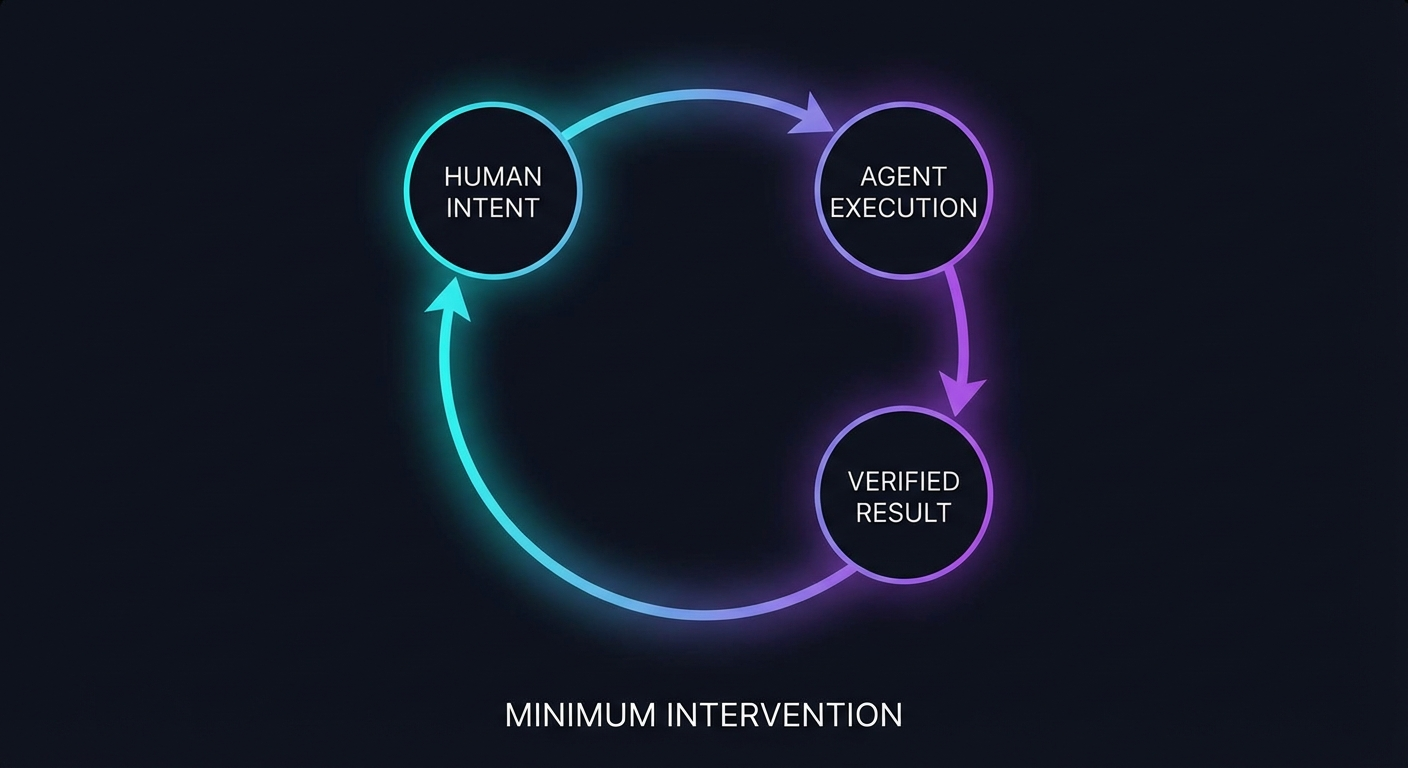
The Core Loop
↻ Minimum Intervention
Extract intent through intelligent interview
Catch ambiguities before they become bugs
Verify plans are complete before execution
Coordinate work without human micromanagement
Force completion, prevent "I'm done" lies
Route to optimal model without human decision
Parallel research without blocking user
Learn from work, don't repeat mistakes
The Future We're Building
"The agent should be invisible. Like electricity, like running water."
"You flip the switch. The light turns on. You don't think about the power grid."